How to Get the Best GLP-1 Results: Why Personalized Care Makes the Difference
July 8, 2026
The conversation surrounding GLP-1 medications has never been more active. Every year brings new research, new medications, and new discussions about what leads to the best outcomes for people living with obesity and metabolic disease.
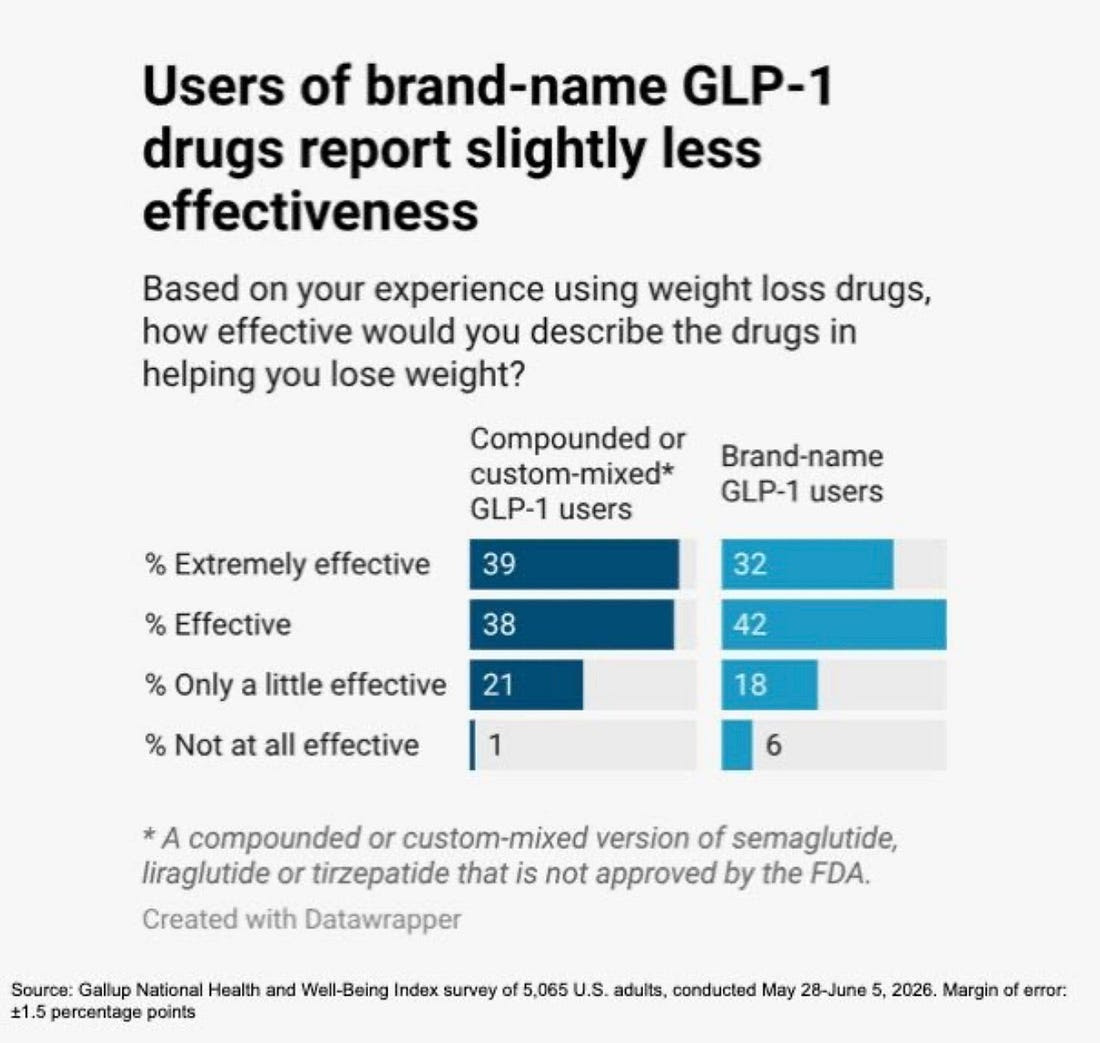
A recent Gallup survey of more than 5,000 Americans using GLP-1 medications has added another interesting perspective to that conversation. One finding quickly gained attention: individuals using compounded GLP-1 medications were more likely to report being "extremely satisfied" with their treatment than those taking brand-name medications.
While headlines may suggest this means compounded medications are somehow "better," that's not what the survey actually tells us.
Are Compounded GLP-1 Medications More Effective?
One of the most important distinctions to understand is that the Gallup survey measured patient satisfaction, not medication efficacy.
It was not designed to compare whether compounded GLP-1 medications produce greater weight loss or better clinical outcomes than FDA-approved brand-name medications. That type of comparison requires randomized clinical trials, not satisfaction surveys.
Instead, Gallup asked people about their overall experience with treatment.
And that may be one of the most important findings of all.
What Ongoing GLP-1 Support Actually Includes
Healthcare isn't simply about prescribing medication.
Patients often want a provider who takes the time to educate them, answer questions, adjust treatment when needed, and provide ongoing guidance throughout their journey.
Many people receiving personalized care appreciate:
Long-term support rather than one-time prescribing
When these pieces come together, patients often feel more confident, supported, and engaged in their care.
That experience can have a meaningful impact on overall satisfaction.
Why the Same GLP-1 Dose Does Not Work for Everyone
There is no single medication or dose that works perfectly for everyone.
Every patient responds differently.
Some individuals need dose adjustments. Others benefit from nutritional counseling, exercise recommendations, improved sleep habits, stress reduction strategies, or evaluation of underlying metabolic conditions that may affect progress.
Successful weight management is rarely about finding the "strongest" medication. Instead, it often comes from building a treatment plan that is individualized to the patient's needs, goals, and response over time.
This personalized approach is one reason telehealth has become such an important part of obesity medicine. Many modern practices combine evidence-based medications with ongoing follow-up, education, and lifestyle support to help patients stay engaged throughout treatment.
How to Get the Best Results From GLP-1 Medication
GLP-1 medications are powerful tools, but they are only one component of long-term success.
The most sustainable results often come from combining medication with:
Balanced nutrition
Regular physical activity
Healthy sleep habits
Stress management
Routine progress monitoring
Personalized medication adjustments when appropriate
Obesity is a complex, chronic medical condition. Successfully treating it means looking beyond the prescription and addressing the whole person.
The Future of GLP-1 Treatment and Obesity Medicine
The future of obesity medicine is incredibly exciting. New medications continue to expand treatment options and improve outcomes for many patients.
But perhaps the next major advancement won't be another molecule alone.
It may be delivering evidence-based medications through a healthcare model that emphasizes education, personalization, accessibility, and ongoing support.
When patients feel heard, informed, and supported throughout their journey, they are more likely to remain engaged with treatment and build sustainable, long-term healthy habits.
A Personalized Approach to GLP-1 Therapy
At Above Wellness, we believe medication is one part of the equation. Our goal is to provide individualized care that combines evidence-based treatment with education, lifestyle guidance, and ongoing support because lasting wellness extends far beyond a prescription.
Disclaimer
This article is intended for educational purposes only and should not be interpreted as evidence that compounded GLP-1 medications are more effective than FDA-approved brand-name medications. Patient satisfaction and medication efficacy are separate measures. Individual treatment decisions should always be made between patients and their licensed healthcare provider. Above Wellness provides prescription medications only through licensed healthcare providers and partners exclusively with licensed 503A compounding pharmacies. We do not sell or recommend products marketed for research use only.
Written by
Above Wellness
A Better Way To Health
Frequently Asked Questions
Does this survey prove compounded GLP-1 medications work better than brand-name medications?
Why were some patients more satisfied with their treatment?
Why is personalized care important for GLP-1 treatment?
U.S. Food & Drug Administration (FDA).Information on Compounded GLP-1 Medications and Compounding During Drug Shortages. Explains FDA oversight of compounded GLP-1 medications and the distinction between FDA-approved medications and compounded prescriptions. https://www.fda.gov/drugs/drug-safety-and-availability
Obesity Medicine Association (OMA).Obesity Algorithm®. Evidence-based clinical guidance emphasizing that obesity is a chronic disease requiring comprehensive, individualized treatment that includes nutrition, physical activity, behavioral modification, and pharmacotherapy when appropriate. https://obesitymedicine.org/obesity-algorithm/
PT-141 for libido helps restore sexual desire and balance disrupted by stress, toxins, and hormonal imbalances. It reactivates the brain’s arousal pathways to reconnect mind and body naturally.
Peptides for weight loss are medical compounds that regulate appetite, improve metabolism, and support fat reduction through clinically proven mechanisms involving GLP-1 and GIP pathways.